Samsara engineers don’t just build technology. They work directly with clients on the frontlines to understand real-world challenges, develop solutions and see their work make an impact at scale.
This approach is central to their engineering culture, said Senior Staff Software Engineer Hannes Magnusson. Engineers are encouraged to get out in the field and see the environments in which their products operate, and then take ownership of solving problems they encounter. According to Magnusson, this recently meant rethinking how customers track shipments.
What Does Samsara Do?
Samsara’s technology saves lives. Consider for a moment the people who build our roads, power our cities and move our goods: their work is hard and dangerous. Samsara's AI warns a driver before a crash, catches a failing part before a breakdown and keeps their operations running. Last year, its technology prevented nearly 380,000 crashes. Samsara's edge is data that you can’t scrape from the internet: their hardware, installed in millions of vehicles and machines, collects more than 30 trillion data points a year from the physical world.
Customers had been using Samsara’s AT11 asset tags — Bluetooth asset tags designed to track tools and equipment —to monitor shipments, but rather than retrieve the tags after shipment, customers were throwing them away because the cost of returning them outweighed the value of the cargo. For Samsara engineers, this sparked an idea: What if we built a disposable tracker?
The result was the Tracking Label, a smart, single-use Bluetooth label that delivers near-real-time shipment visibility while letting businesses know when something goes off course. Unlike typical barcode tracking, which only records shipments at specific checkpoints, the Tracking Label can show when something is delayed or, off-route or near delivery. It was unveiled at Samsara’s 2026 Beyond Conference, where engineering employees show the problems their teams are tackling in physical AI — and the products they’re building to address these customer challenges.
Inside Samsara’s 2026 Beyond Conference
Earlier this year, Samsara invited software, hardware, AI and ML engineers, along with product designers and product managers, to its San Francisco headquarters for an event exploring “the return to physical.” During the event, Samsara employees showcased problems their teams are tackling in physical AI and offered a closer look at products including the Tracking Label through live demos.
Developing the product required engineers to navigate the complexities of physical operations, like unreliable wireless signals and even limited battery power. After all, Samsara’s technology must be able to run in heat, dust, snow and vibration. It also meant figuring out how to make the technology work at scale without requiring customers to install new infrastructure. According to Magnusson, these types of challenges — and the culture of ownership and autonomy — are exactly why engineering at Samsara is so exciting.
“Whatever you build stands on millions of devices giving you coverage on day one,” Magnusson said. “That’s how you can ship a simple, cheap, disposable sticker with no GPS or cell radio and have it work at scale.”
Below, Magnusson shares more about the creation of the Tracking Label, which was recently recognized by Fast Company as one of the four next ‘big things’ in transportation in 2026, the challenges of developing technology for physical operations and why Samsara is a uniquely exciting place to build an engineering career.

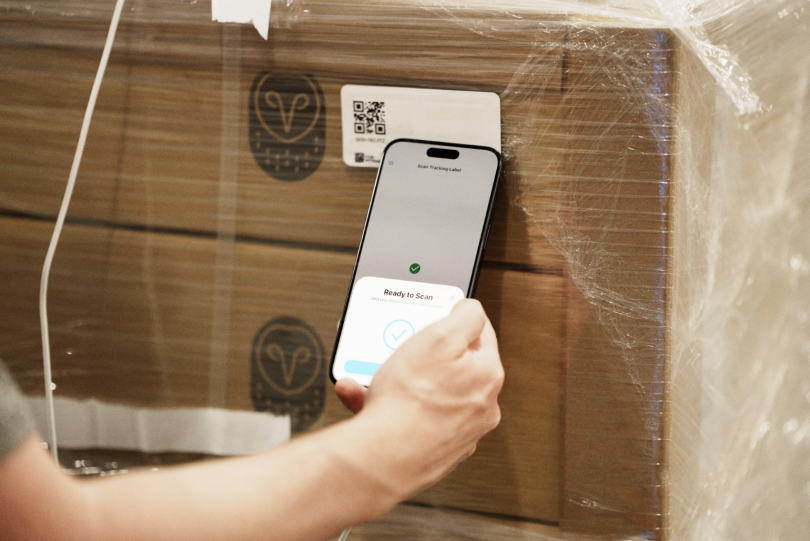
How Samsara Engineers Brought the Tracking Label to Life
Customers invented it before we did. They were buying our AT11 asset tag, a reusable, more expensive device, sticking it on shipments and throwing it away on arrival. When we asked why, the math was simple: The cargo was valuable enough to justify using an asset tag once, and the reverse logistics of getting tags back cost more than the tags.
So, what if we just made a disposable tracker?
The hardware took a few iterations, but the software approach is what really landed: Manage by exception. Nobody running a busy operation needs a dashboard saying everything is green. “All fine” is just noise. What you want surfaced is the shipment that’s way off route, the one that’s stuck or the one that’s almost there so you can make sure the consignee is ready. The hard part is telling those situations apart and estimating when a shipment will arrive.
How Customer Feedback Shapes Product Development at Samsara
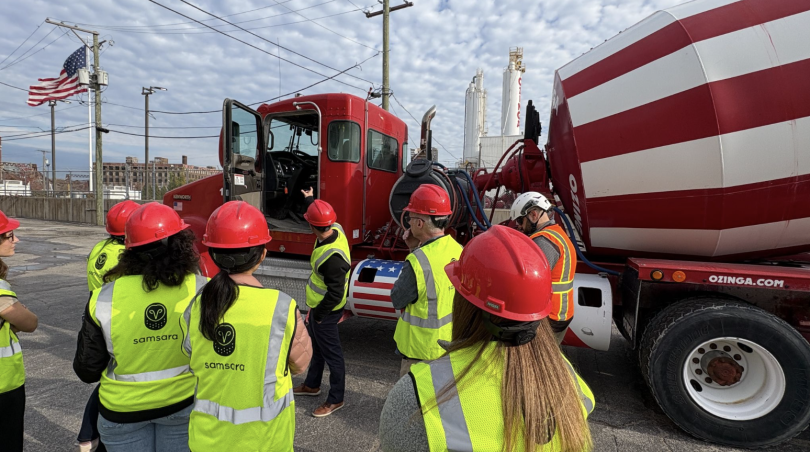
We’re expected to get out and experience the real world. Talk to customers. Go on site. Work the assembly line. Do an install yourself. Understand the issues customers face before trying to solve them.
It helped that we’d experienced many of these problems ourselves at Samsara. Plenty of cargo we’ve shipped to customers has vanished, been misplaced or missed the site date. There’s no substitute for being on the ground.
And we could act on what we learned. Our small team worked on the problem directly, with ongoing feedback from our operations and warehouse teams. They’ve been amazing partners throughout.
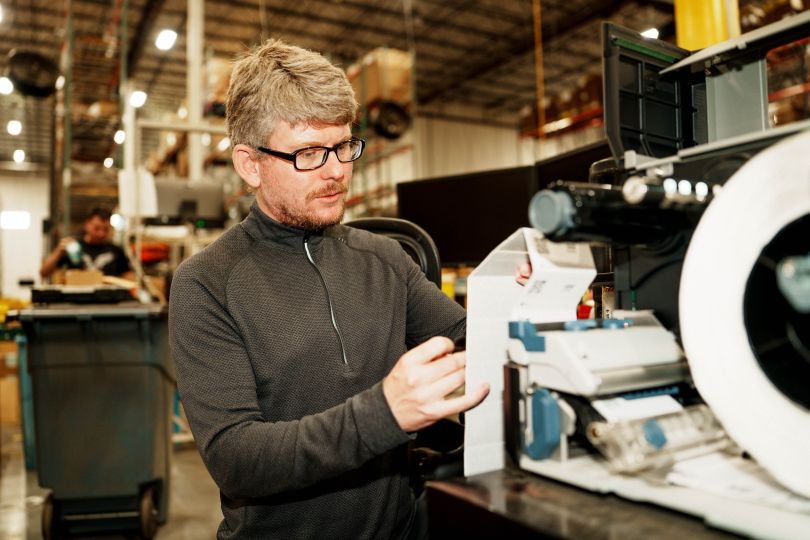
Why Physical AI Is an Exciting Space for Engineers
This may sound counterintuitive, but: Most of the world’s data doesn’t exist yet. In physical operations, the interesting things happen to trucks, pallets and crates, and nobody is recording most of it.
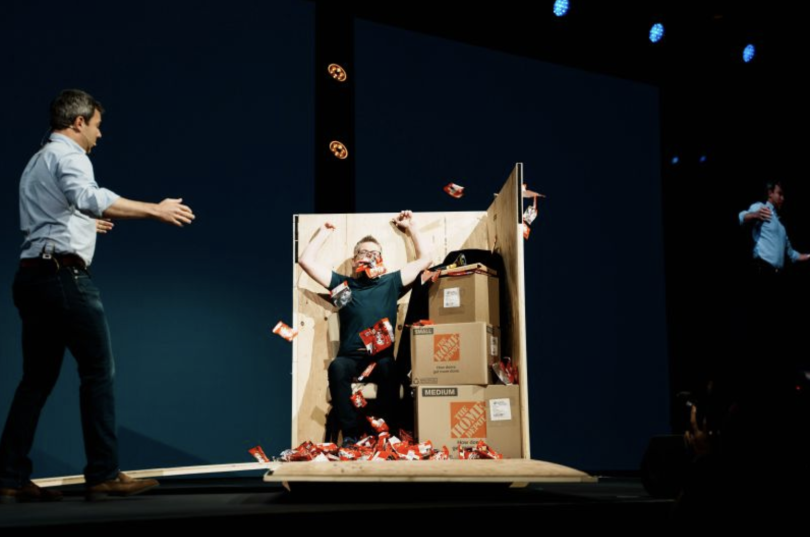
My favorite example: In March, thieves dressed as police pulled a truck over outside Turin and drove off with 12 tons of Formula 1–shaped KitKats, over 400,000 bars, right before Easter. Nobody knew where they went. The best anyone had was a scan from the last facility the truck passed through. When we announced the Samsara Tracking Label at Beyond, I jumped out of a shipping crate covered in KitKat wrappers. On my way off stage, I stuck a Samsara Tracking Label on a KitKat and said, “If only we’d come up with this earlier.” It got a laugh, but that’s the actual problem: A truck full of cargo can disappear, and without data, you have no way to see what happened next.
Once the data exists, you can spot things nobody could see before. Everyone has had a shipment turn up weeks late. Often it isn’t lost; it’s lodged behind something in the delivery van. We can detect that now. The label keeps driving into the delivery zone and back out, day after day, while everything else on that van gets delivered. A barcode will never tell you that. It was scanned, correctly, at every step.
What Sets Samsara’s Engineering Team Apart
We have a lot of devices and an insane amount of data. But what’s exciting is the intersection of new hardware development and what we can do with the hardware that’s already out there, giving us incredible network coverage. We’re only scratching the surface.
Whatever you build stands on millions of devices giving you coverage on day one. That’s how you can ship a simple, cheap, disposable sticker with no GPS or cell radio and have it work at scale. There aren’t many places an engineer can build something that small and see it work at that scale immediately.
Frequently Asked Questions
What does Samsara do?
Samsara develops technology designed to protect workers and maintain physical operations across industries like construction, energy, and transportation. Operating through hardware installed across millions of vehicles and industrial machines, its platform collects over 30 trillion data points annually from the physical world. Samsara uses this data alongside AI to warn drivers before crashes (preventing nearly 380,000 crashes last year), detect failing equipment parts before breakdowns, and provide real-time operational visibility.
What is the Samsara Tracking Label?
The Samsara Tracking Label is a smart, single-use, disposable Bluetooth label designed to provide near-real-time visibility for shipments without requiring expensive new infrastructure, GPS or cellular radios. Recognized by Fast Company as one of the four next "big things" in transportation in 2026, it operates under a "manage by exception" model, surfacing critical alerts when a shipment is stuck, off-route, delayed or approaching its delivery destination, rather than simply logging checkpoint scans like traditional barcodes.
Why did Samsara develop the Tracking Label?
Samsara developed the Tracking Label after observing how customers handled its existing AT11 asset tags. Customers were purchasing Samsara's more expensive, reusable AT11 Bluetooth asset tags, sticking them onto valuable cargo, and throwing them away upon delivery because the cost of reverse logistics to retrieve the devices was higher than the tag itself. Standard barcode scanning only captures data at fixed milestones, leaving blind spots when shipments vanish, get left behind in delivery vans, or go off-route. Samsara engineered a low-cost, disposable sticker that could leverage the company's existing network of millions of active devices for day-one coverage, bypassing the prohibitive costs of alternatives like RFID, which can start at $12,000 per truck).