


Our mission is to detect cancer early, when it can be cured. We are working to change the trajectory of cancer mortality and bring stakeholders together to adopt innovative, safe, and effective technologies that can transform cancer care.
We are a healthcare company, pioneering new technologies to advance early cancer detection. We have built a multi-disciplinary organization of scientists, engineers, and physicians and we are using the power of next-generation sequencing (NGS), population-scale clinical studies, and state-of-the-art computer science and data science to overcome one of medicine’s greatest challenges.
GRAIL is headquartered in Menlo Park, California, with locations in Washington, D.C., North Carolina, and the United Kingdom. It is supported by leading global investors and pharmaceutical, technology, and healthcare companies.
For more information, please visit grail.com.
GRAIL processes patient blood samples in factory-like laboratories to detect cancer. Engineering teams are tasked with building software and hardware to automate, analyse and streamline many processes in the lab. Additionally, Operations need metrics and insights into how things are running so that they can be improved. The data for some of these metrics have historically been built by Analysts within Operations. These are now moving under Software Engineering and we are building a team to support, stabilize and enhance these pipelines
We will hire candidates for this hybrid role in either Menlo Park, CA or Durham, NC.
Responsibilities
- Be a part of a highly collaborative team focused on delivering value to cross-functional partners by designing, deploying, and automating secure, efficient, and scalable data infrastructure and tools—reducing manual efforts and streamlining operations.
- Help model Grail data to ensure it follows FAIR principles (Findable, Accessible, Interoperable, and Reusable).
- Drive the design, deployment, and automated delivery of data infrastructure, standardized data models, datasets, and tools.
- Integrate automated testing and release processes to improve the quality and velocity of software and data deliveries.
- Collaborate with cross-functional teams—ranging from Research to Clinical Lab Operations to Software Engineering—to provide comprehensive data solutions from conception to delivery.
- Ensure all software and data meet high standards for quality, clinical compliance, and privacy.
- Mentor fellow engineers and scientists, promoting best practices in software and data engineering.
Preferred Qualifications
- B.S. / M.S. in a quantitative field (e.g., Computer Science, Engineering, Mathematics, Physics, Computational Biology) with 8+ years of related industry experience, or Ph.D. with at least 5 years of related industry experience or equivalent.
- Extensive experience developing with relational databases, data modeling principles, data pipeline tools, and workflow engines (e.g., SQL, DBT, Apache Airflow, AWS Glue, Spark).
- Extensive experience with DevOps practices, including CI/CD pipelines, containerized deployment (e.g., Kubernetes), and infrastructure-as-code (e.g., Terraform).
- Experience supporting data science and machine learning data pipelines, preferably in the context of biological data analysis and using Python.
- Ability to embrace uncertainty, navigate ambiguity, and collaborate with product teams and stakeholders to refine requirements and drive toward clear engineering objectives and designs.
- You are a strong written and verbal communicator and can adapt your communication style and the level of detail to your audience.
Expected full time annual base pay scale for the bay area is $163K-$216K. Actual base pay will consider skills, experience and location.
Based on the role, colleagues may be eligible to participate in an annual bonus plan tied to company and individual performance, or an incentive plan. We also offer a long-term incentive plan to align company and colleague success over time.
In addition, GRAIL offers a progressive benefit package, including flexible time-off, a 401k with a company match, and alongside our medical, dental, vision plans, carefully selected mindfulness offerings.
GRAIL is an Equal Employment Employer and does not discriminate on the basis of race, color, religion, sex, sexual orientation, gender identity, national origin, protected veteran status, disability or any other legally protected status. We will reasonably accommodate all individuals with disabilities so that they can participate in the job application or interview process, to perform essential job functions, and to receive other benefits and privileges of employment. Please contact us to request accommodation. GRAIL maintains a drug-free workplace.
GRAIL Menlo Park, California, USA Office
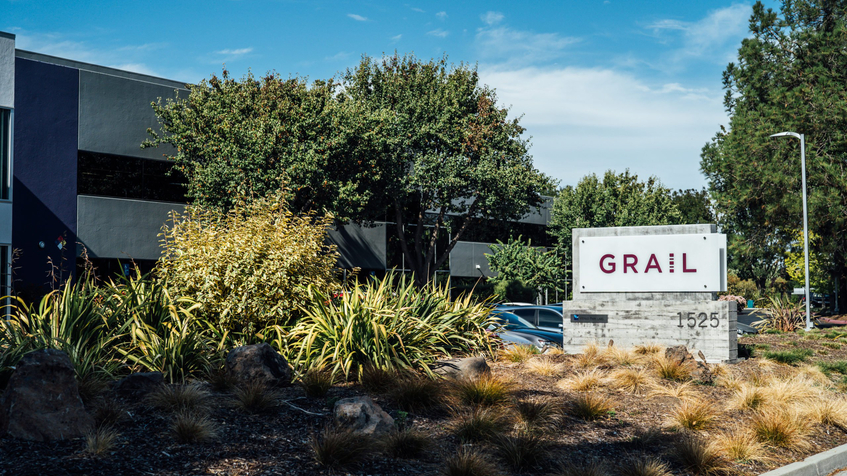
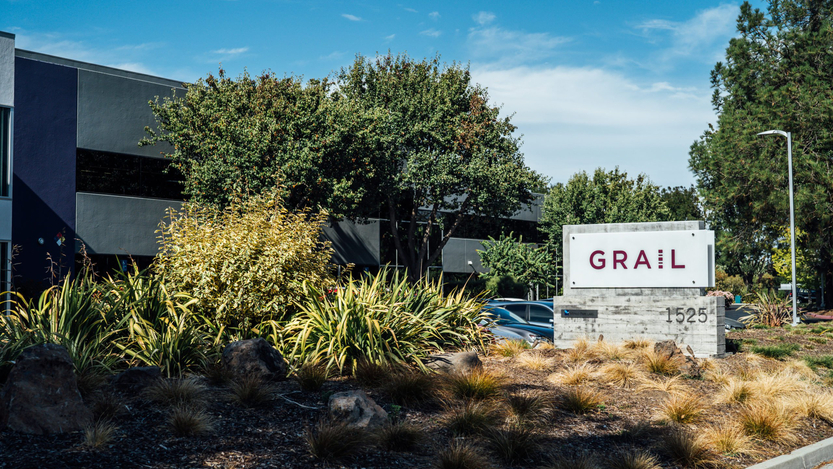
GRAIL is headquartered in Menlo Park, California, with locations in Washington, D.C., North Carolina, and the United Kingdom. We also have a number of employees who are working remotely. Our bay area office has a employees working in our labs, software engineering, clinical development and more.
What you need to know about the San Francisco Tech Scene
San Francisco and the surrounding Bay Area attracts more startup funding than any other region in the world. Home to Stanford University and UC Berkeley, leading VC firms and several of the world’s most valuable companies, the Bay Area is the place to go for anyone looking to make it big in the tech industry. That said, San Francisco has a lot to offer beyond technology thanks to a thriving art and music scene, excellent food and a short drive to several of the country’s most beautiful recreational areas.
Key Facts About San Francisco Tech
- Number of Tech Workers: 365,500; 13.9% of overall workforce (2024 CompTIA survey)
- Major Tech Employers: Google, Apple, Salesforce, Meta
- Key Industries: Artificial intelligence, cloud computing, fintech, consumer technology, software
- Funding Landscape: $50.5 billion in venture capital funding in 2024 (Pitchbook)
- Notable Investors: Sequoia Capital, Andreessen Horowitz, Bessemer Venture Partners, Greylock Partners, Khosla Ventures, Kleiner Perkins
- Research Centers and Universities: Stanford University; University of California, Berkeley; University of San Francisco; Santa Clara University; Ames Research Center; Center for AI Safety; California Institute for Regenerative Medicine
